
Cat Diet Hydration & Nutrition Estimator
Diet Input
Nutritional Analysis
| Metric | Your Selection | Ideal Goal |
|---|---|---|
| Moisture | - | High |
| Carbs | - | Low |
| Kidney Strain | - | Low |
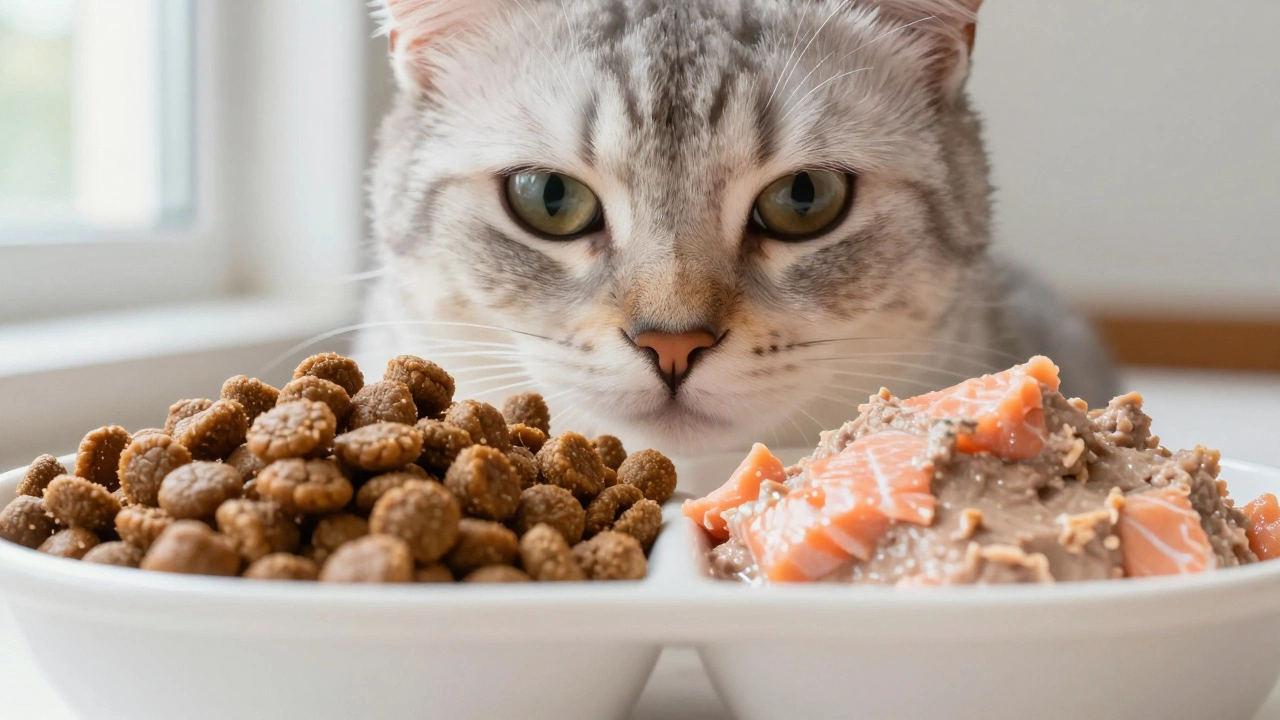
Wet vs dry cat food isn't just about convenience; it's about moisture and nutrient density. Cats are descendants of desert dwellers, meaning they have a low thirst drive. They aren't like dogs who will drink a bowl dry after a walk. Instead, they evolved to get most of their water from their prey-small rodents and birds that are essentially water-filled balloons. When we switch them to a bone-dry pellet, we are asking their bodies to do something they aren't naturally wired for.
The Hydration Gap and Kidney Health
The biggest difference between the two is the water content. Dry Cat Food is a processed pellet typically containing only 6% to 10% water. In contrast, Wet Cat Food usually contains about 75% to 80% water. This isn't just a small difference; it's a massive gap in hydration.
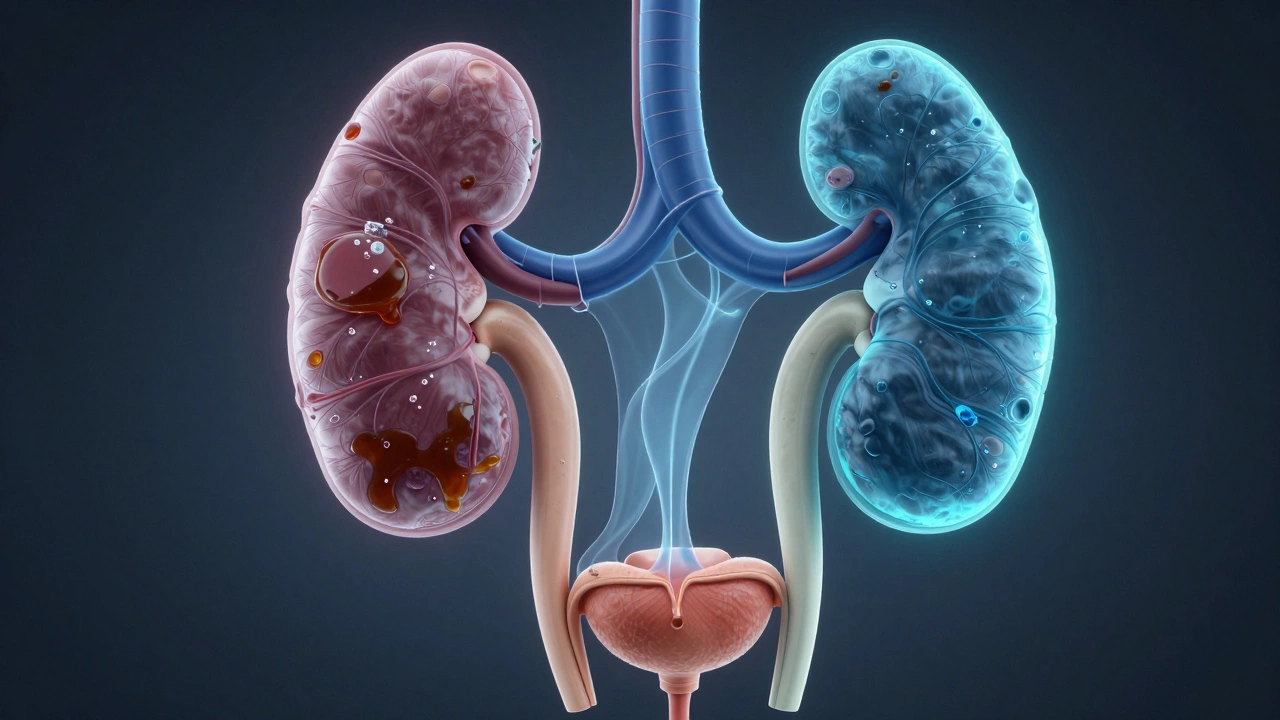
When a cat eats only dry food, their kidneys have to work overtime to concentrate urine. This puts a huge strain on the Renal System, which is already a weak point for many domestic cats. Over time, this concentration can lead to the formation of crystals or stones in the bladder. If you've ever had a male cat with a urinary blockage, you know how terrifying that emergency vet visit is. High moisture intake flushes the system, making the urine more dilute and significantly lowering the risk of Feline Lower Urinary Tract Disease (FLUTD).
The Carbohydrate Trap in Kibble
Have you ever looked at the ingredients list on a bag of kibble and seen corn, wheat, or pea protein near the top? There is a reason for that. To make a piece of dry food hold its shape as a crunchy pellet, manufacturers use starches. These act as a glue. However, cats are Obligate Carnivores, meaning their bodies are biologically required to eat meat to survive. They have almost no requirement for carbohydrates.
Excess carbs in a dry diet can lead to weight gain and, more seriously, Feline Diabetes. When a cat consumes too many sugars and starches, their insulin levels spike. Wet foods, especially high-quality pates, tend to be much lower in carbs because they don't need starch to keep their shape. If your cat is overweight or prone to blood sugar issues, moving away from the "crunchy stuff" is often the first piece of advice a vet will give.
Does Dry Food Actually Clean Teeth?
One of the biggest myths in the pet world is that dry food is like a toothbrush for cats. The idea is that the hard pellets scrape plaque off the teeth as the cat chews. In reality, most cats simply swallow kibble whole or barely crunch it. The particles are too small and too quickly dissolved by saliva to provide any real mechanical cleaning. It's like trying to clean your teeth by eating a cracker; it just doesn't work.
If dental health is your main concern, you are better off with a combination of dental treats and professional cleanings. Relying on dry food for oral hygiene is a gamble that often results in Periodontal Disease, which can eventually lead to heart or kidney infections if bacteria from the gums enter the bloodstream.
The Convenience vs. Cost Trade-off
Let's be honest: dry food is way more convenient. You can leave a bowl out all day, and it doesn't smell up the kitchen. Wet food, on the other hand, spoils quickly and can be expensive if you're buying premium cans. However, the cost of a few extra cans a month is nothing compared to the cost of treating chronic kidney failure or managing diabetes for a decade.
| Feature | Dry Food (Kibble) | Wet Food (Canned/Pouch) |
|---|---|---|
| Water Content | Low (approx. 10%) | High (approx. 75-80%) |
| Carbohydrate Levels | High (due to binders) | Generally Low |
| Kidney Support | Lower (concentrates urine) | Higher (promotes flushing) |
| Convenience | High (self-service) | Moderate (requires feeding times) |
| Cost per Calorie | Lower | Higher |
The Hybrid Approach: Finding the Middle Ground
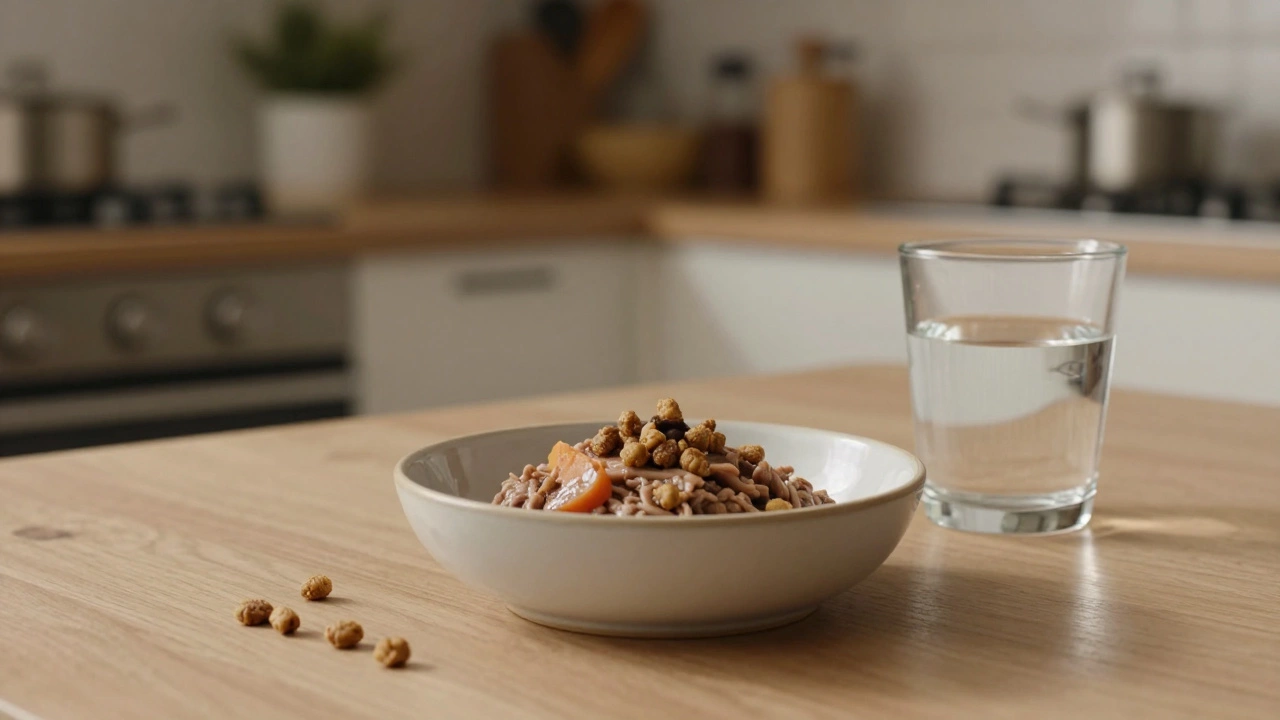
You don't necessarily have to go 100% wet if your cat refuses to touch it or if your budget is extremely tight. Many owners find success with a "mixed feeding" strategy. This means providing wet food for the main meals to ensure hydration and protein intake, while leaving a small, measured amount of high-quality dry food for grazing.
If you go this route, keep an eye on the calories. Dry food is incredibly calorie-dense. A handful of kibble can have as many calories as a whole can of wet food. If you provide both without adjusting the portions, your cat will likely gain weight quickly. A good rule of thumb is to use dry food as "treats" rather than the primary source of nutrition.
Red Flags to Watch Out For
Regardless of the format, the quality of the ingredients is what actually matters. Avoid foods that list "meat by-products" or "animal derivatives" without specifying the animal. You want to see real protein-like chicken, turkey, or salmon-listed first. Also, be wary of artificial colors and preservatives like BHA or BHT, which can be inflammatory over time.
If you notice your cat is drinking more water than usual, visiting the litter box more frequently, or seems lethargic, it's time for a vet check. These are often early signs that the kidneys are struggling to keep up with a low-moisture diet. Switching to wet food at this stage can often slow the progression of Chronic Kidney Disease (CKD).
Making the Switch Without the Drama
Cats are notoriously picky. If you try to swap their beloved kibble for a can of pate overnight, they might just stare at it with disgust. To successfully transition your cat, you need to be patient. Start by mixing a tiny teaspoon of wet food into their dry food. Gradually increase the amount over 7 to 10 days.
If they are still resisting, try different textures. Some cats hate pate but love shreds or chunks in gravy. You can also try adding a little warm water or a splash of tuna juice (salt-free) to the wet food to make it smell more enticing. Once they get a taste for the moisture, most cats rarely go back to eating dry food exclusively.
Can dry food cause kidney failure in cats?
While dry food alone might not cause immediate failure in every cat, it significantly increases the risk. Because it lacks moisture, it forces the kidneys to work harder to filter toxins, which can lead to chronic kidney disease or the formation of urinary crystals over several years.
Is it okay to feed a cat only wet food?
Yes, and for many cats, it is actually the healthier choice. As long as the wet food is labeled as "complete and balanced," it provides all the vitamins and minerals a cat needs without the excess carbs found in kibble.
How do I keep my cat's teeth clean if I only feed wet food?
Since wet food doesn't clean teeth, you can use vet-approved dental treats, water additives designed to fight plaque, or even a soft pet toothbrush and cat-safe toothpaste. Regular professional cleanings by a vet are the most effective method.
Why is wet food more expensive than dry food?
Wet food contains a higher percentage of protein and water, which costs more to source and package. Additionally, the canning process and the weight of the water make shipping and storage more expensive than lightweight bags of kibble.
What should I do if my cat refuses wet food?
Try different brands and textures, such as mousse, pate, or chunks. You can also try warming the food slightly to enhance the smell or mixing a small amount of their favorite dry food on top as a "topper" to lure them in.