
Airline Pet Policy Checker
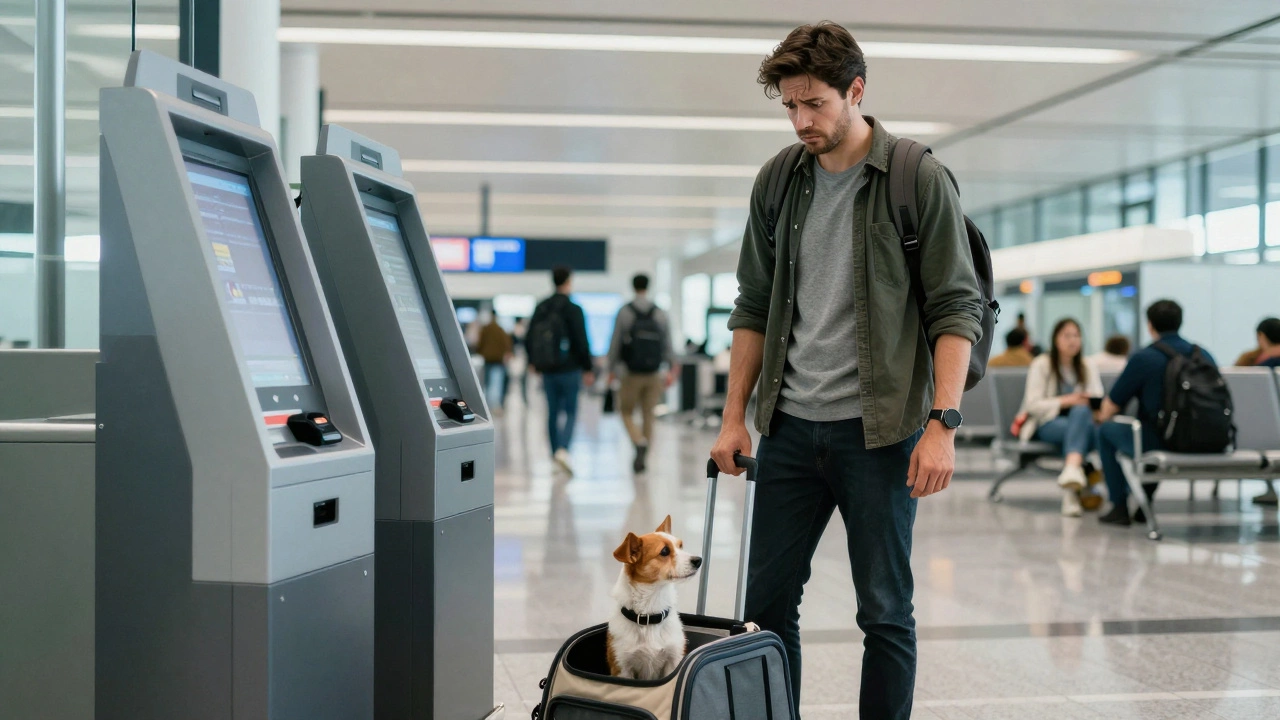
Imagine you’ve just booked a flight for your family reunion. You’re excited. Then you remember your dog is coming too. You check the airline’s website, scroll past the baggage fees, and hit a wall: "Pets are not accepted." Frustrating, right? It happens more often than you might think. While most major carriers have figured out how to transport furry friends, there are still plenty of airlines that simply do not allow pets in the cabin or as checked baggage.
If you are planning a trip with an animal companion, knowing which airlines say "no" before you book can save you from a last-minute nightmare. This isn't just about budget carriers; it includes some well-known international brands and specific routes where regulations tighten up. Let’s break down who won’t take your pet and why, so you can plan smarter.
The Budget Airline Rule: Why Low-Cost Carriers Say No
When we talk about airlines that don’t allow pets, the biggest group is low-cost carriers. These companies operate on a razor-thin margin model. Every square inch of space is money. A crate takes up room that could be used for luggage or extra seats. More importantly, handling animals requires staff time, special equipment, and liability insurance. For a budget airline, that overhead doesn’t make sense.
Ryanair is one of Europe's largest low-cost carriers that strictly prohibits pets in the cabin and does not offer checked baggage services for animals. If you fly Ryanair, your dog stays home. Same goes for Spirit Airlines, a US-based ultra-low-cost carrier that does not accept pets as checked baggage or in the cabin. Spirit focuses purely on point-to-point cheap flights without the extras. Other notable names in this category include Flybe (though its operations have shifted, similar regional low-cost models persist), Breeze Airways, and AirAsia.
Why do they ban them? It comes down to logistics. In a full cabin, if a dog barks or gets anxious, it disrupts other passengers. Budget airlines rely on high density and quick turnarounds. They don’t have the infrastructure to manage conflicts or delays caused by animal stress. So, if you see a great deal on a budget carrier, double-check their pet policy. Chances are, it’s a hard no.
International Giants with Strict Policies
You might assume that big, legacy international airlines always accommodate pets. That’s not entirely true. Some major carriers have removed pet services from certain routes or entirely due to safety concerns, heat regulations, or operational complexity.
Emirates is a major Middle Eastern airline that does not allow pets in the cabin on any of its flights. You can ship your pet as cargo, but they cannot sit next to you. This is a common point of confusion. Many travelers assume "pet-friendly" means "in-cabin," but for Emirates, it means "checked cargo only." Similarly, Qatar Airways has strict limitations on pet travel, often restricting it to cargo holds and imposing breed bans. They frequently update their list of brachycephalic (short-nosed) breeds that are banned due to breathing risks at altitude.
In Asia, Cathay Pacific allows pets in cargo but has very limited in-cabin options, mostly restricted to service animals. And while Singapore Airlines has a sophisticated pet program, it is primarily for cargo and requires extensive advance booking. If you want your cat in a carrier under the seat, these Asian giants usually aren’t the answer.
The Brachycephalic Breed Ban: Who Restricts Short-Nosed Pets?
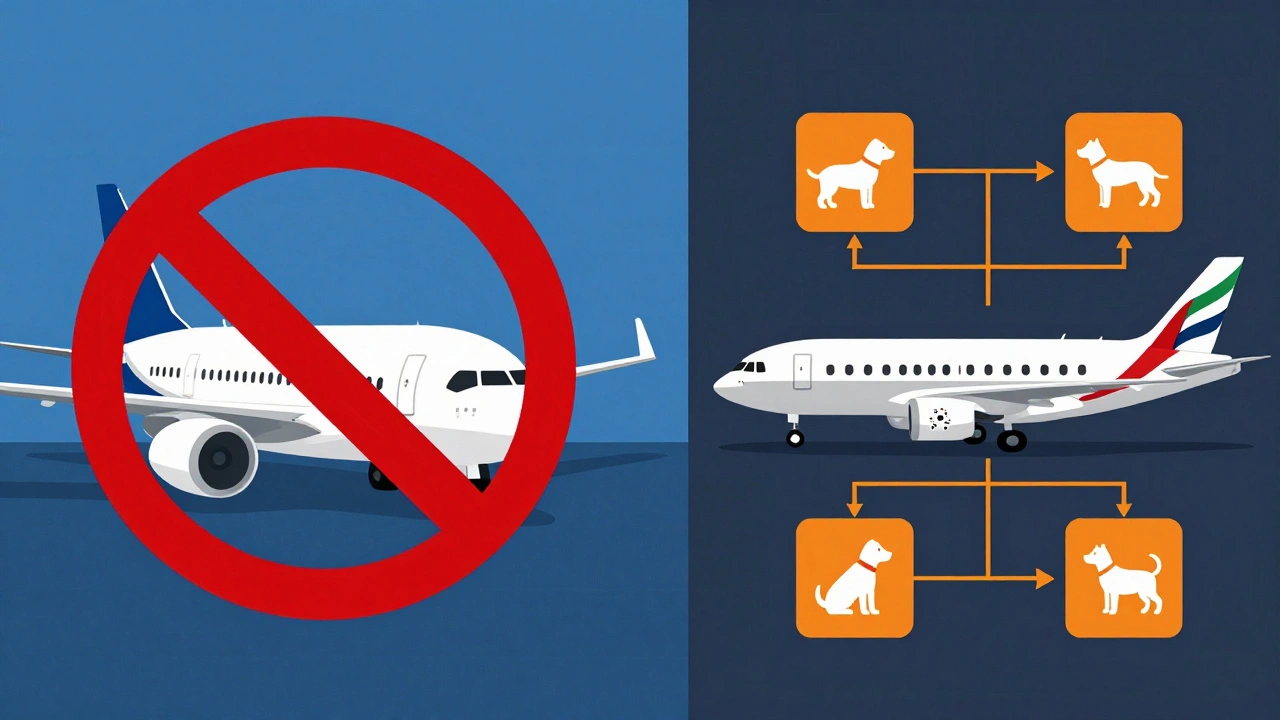
This is a critical distinction. An airline might allow pets generally but ban specific breeds. This affects bulldogs, pugs, Persian cats, and boxers. These animals have short snouts and struggle to breathe when stressed or exposed to temperature changes. Several airlines have instituted total bans on these breeds, effectively meaning those owners cannot fly with their pets on those carriers.
British Airways enforces a strict ban on brachycephalic breeds traveling in the hold during warmer months (April to September). Outside those months, rules relax slightly, but restrictions remain. Lufthansa also imposes significant restrictions on short-nosed dogs and cats, often prohibiting them from cargo travel entirely depending on the destination. Even if the airline says "pets allowed," your specific pet might be excluded. Always check the breed list, not just the general policy.
Regional and Domestic Variations
In the United States, the landscape is shifting. While Delta, American, and United allow small pets in the cabin, they have tightened rules post-pandemic. However, some smaller regional partners may not follow suit. For example, if your ticket is issued by a major carrier but flown by a regional affiliate like Envoy Air or Endeavor Air, the pet policy usually aligns with the main brand, but exceptions occur on smaller aircraft with less legroom.
In Europe, Eurostar is not an airline, but it’s a key alternative for ground travel that has strict pet rules, requiring reservations and fees. But sticking to air, EasyJet does not allow pets in the cabin, except for registered assistance dogs. This surprises many people because EasyJet is huge in Europe. If you’re hopping between London and Dublin, you can’t bring your dog onboard unless it’s a guide dog.
| Airline | Pet Policy Status | Exceptions |
|---|---|---|
| Ryanair | No pets allowed | Assistance dogs only |
| Spirit Airlines | No pets allowed | None |
| Emirates | No in-cabin pets | Cargo only (with restrictions) |
| EasyJet | No pets in cabin | Assistance dogs only |
| Breeze Airways | No pets allowed | None |
| AirAsia | No pets in cabin | Cargo only (select routes) |
Why Do Airlines Ban Pets? The Hidden Costs
It’s easy to feel angry when an airline says no. But understanding the reasons helps you navigate the system. First, there’s the issue of anxiety. Dogs and cats are sensitive to pressure changes, noise, and confinement. A stressed animal can bite, scratch, or soil the cabin. Cleaning a plane between flights takes minutes, not hours. Biohazards cause delays.
Second, there’s the legal liability. If a pet escapes or harms another passenger, the airline is responsible. Insurance premiums go up. Third, there’s the equity issue. If one person brings a dog, others expect to bring theirs. Soon, half the cabin is occupied by crates. That reduces revenue. Airlines have to draw a line somewhere.
Finally, there’s the welfare angle. Recent years have seen high-profile incidents of pets dying in cargo holds due to extreme temperatures. To avoid bad PR and ethical backlash, some airlines choose to stop accepting pets altogether rather than risk tragedy. It’s a tough call, but it explains why policies are tightening.

What Can You Do Instead?
If your preferred airline doesn’t allow pets, you have options. First, consider driving. For distances under 500 miles, a car ride is often less stressful for both you and your pet. Second, look into pet relocation services. Companies like Four Paws or Global Pet Movers specialize in transporting animals safely via cargo, with handlers monitoring conditions. It costs more, but it’s safer than DIY cargo booking.
Third, use a pet sitter or boarding facility. Sometimes, leaving your pet at home is the kindest choice. They avoid the stress of travel, and you get to enjoy your trip without worrying about whether Fido made it through security.
How to Check Before You Book
Never assume. Always verify. Here’s a quick checklist:
- Visit the airline’s official website. Look for "Traveling with Pets" or "Special Assistance."
- Call customer service. Websites can be outdated. A live agent confirms current rules.
- Check breed restrictions. Even if pets are allowed, yours might be banned.
- Verify route availability. Some airlines allow pets on domestic flights but not international ones.
- Confirm health certificates. Most airlines require a vet visit within 10 days of travel.
Don’t rely on third-party booking sites. They often miss pet policy details. Go straight to the source.
Do any airlines allow large dogs in the cabin?
Very few. Most airlines limit in-cabin pets to small animals that fit under the seat (usually under 15-20 lbs including carrier). Large dogs must travel in cargo. Exceptions are rare and usually involve service animals, which have different legal protections.
Is it cheaper to fly with a pet or drive?
For short distances, driving is almost always cheaper. Airline pet fees range from $95 to $150 each way. Add fuel, food, and lodging for driving, and it might break even for long trips. But factor in stress and convenience. Driving offers control; flying offers speed.
Can I bring my pet on a budget airline if I pay extra?
No. Budget airlines like Ryanair and Spirit do not accept pets regardless of payment. Their business model excludes the logistical overhead of animal transport. Paying extra won’t change their policy.
What happens if I try to sneak a pet onto a flight?
You will likely be caught at security or by crew members. Consequences include fines, being denied boarding, and potentially blacklisting from the airline. It also endangers your pet and other passengers. Never attempt this.
Are emotional support animals still allowed in cabins?
In the US, DOT rules changed in 2021. Emotional support animals are now treated as regular pets. Only certified service dogs (trained for specific disabilities) have guaranteed access. Many airlines now charge pet fees for ESAs. Check current DOT guidelines and airline policies.